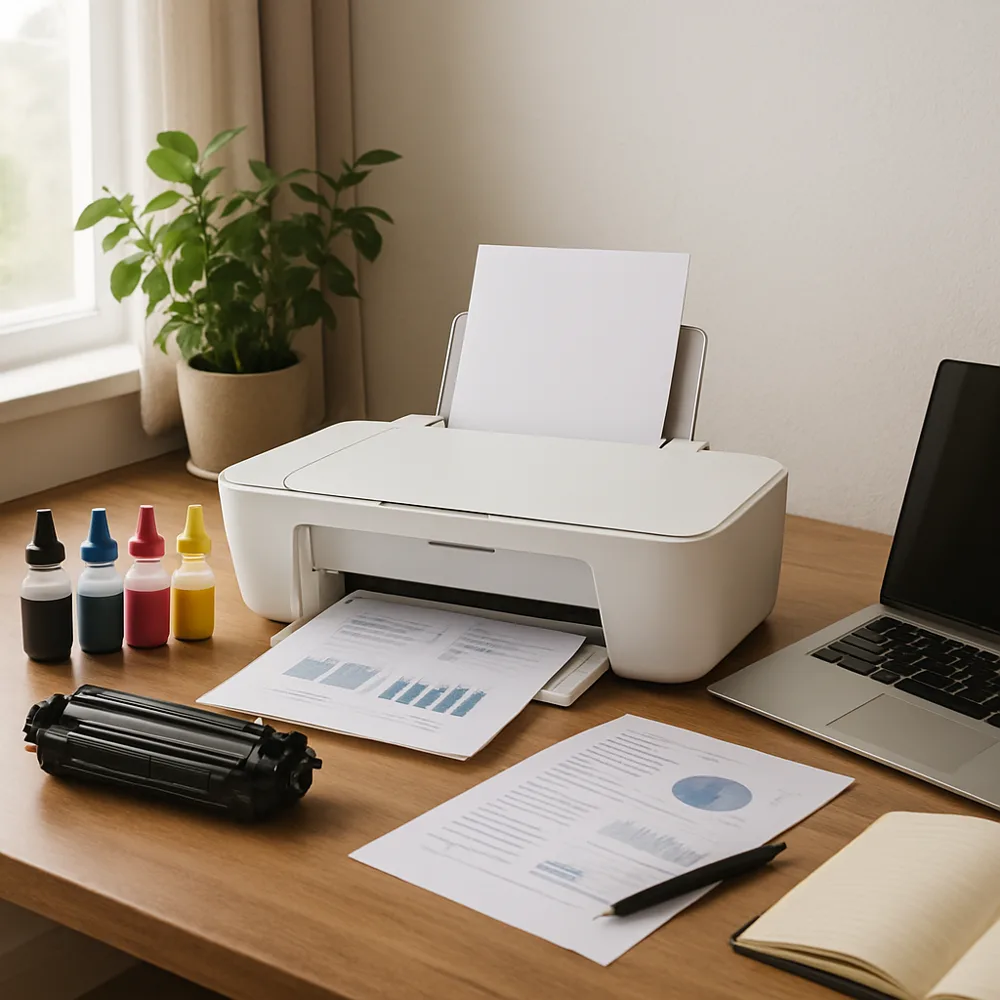
Cost per page is a useful way to compare supplies, but it works best as an estimate. For a basic calculation, divide the cost of the ink or toner used by the number of pages that supply produces. If you buy cartridges in a set, include the relevant set cost and consider both color and black usage rather than treating every page as identical.
The difficult part is choosing a realistic page count. A published yield comes from a standard test and may not match your documents. Full-page graphics, photos, and heavily formatted worksheets use more color than plain text. Printer maintenance and cleaning can also use ink, while paper and electricity add costs that a cartridge-only estimate leaves out.
For a personal estimate, record the date and page count when you install a cartridge, then note the count when it needs replacement. Repeat this over a few cycles if possible. Divide what you paid for the supply by the pages printed. Track color and black cartridges separately when your printer provides useful counters.
Use the result to compare printers or printing habits, not as an exact bill for every job. Duplex printing can lower paper use, and previewing documents can prevent unwanted pages. If a certain task uses lots of ink, compare printing it at home with other practical options, including whether a digital copy is sufficient.