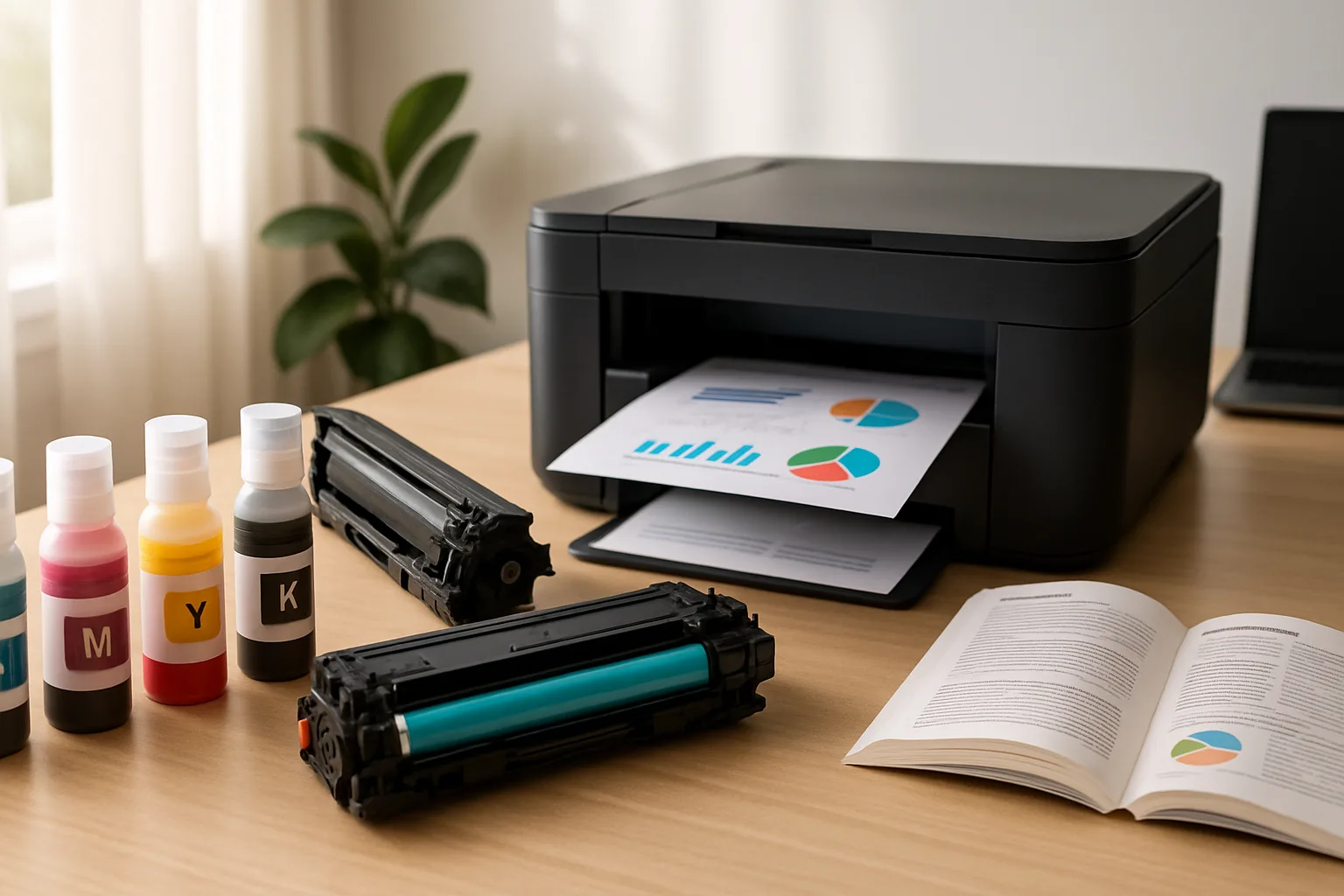
For records you expect to keep, prioritize clear text and stable paper over the fastest draft setting. Use a normal or high-quality mode when fine print, signatures, or small tables matter. Review a sample page before printing a full set, and make sure the text is dark enough to scan or photocopy if needed.
Use paper suited to your printer and the document’s purpose. Store unused paper dry and flat so pages feed cleanly. If the record contains color-coded information, confirm that it remains understandable in grayscale before choosing a black-and-white setting. Keep an electronic copy when practical, especially for documents that would be difficult to recreate.
Let inkjet pages dry completely before stacking them. Avoid folding or rubbing fresh prints, and use folders or envelopes to reduce dust and handling. Keep documents away from moisture, direct sunlight, and heat sources. Toner-based laser prints also benefit from sensible storage; follow the printer and paper guidance for the conditions appropriate to the materials.
For legally or professionally important records, check whether a digital original or a particular paper process is required. Home printing is convenient, but it does not automatically meet every archival or official standard. Label and organize copies clearly, and periodically confirm that both printed and digital versions remain readable and accessible.